(Editor’s note: This is the first of three posts about my experiences traveling to and from Antarctica in November 2025. It was the culmination of a lifelong dream. I’ve also included some of the over 500 photos I took in this precious yet largely inhospitable land.)
As our ship rocked wildly in 25- to 30-foot waves in one of the world’s most treacherous ocean passages, I bounced from wall to wall in my shower. After about 10 minutes, I adapted. I held onto a chest-high rail with one hand while washing with the other … and then reversed when I needed to use the other hand. Minutes later my attempt to brush my teeth was interrupted when my head smashed against the bathroom mirror. I was relieved when a closer look failed to detect evidence of blood. The mirror was intact. I quickly finished brushing, spreading my feet wider to retain balance. It was a difficult awakening after a night of sleep interrupted by moments of weightlessness beneath the covers as the ship pitched downward, only to be pressed briskly back onto the mattress as the ship thrusted upward. Loud bangs echoed through the ship as waves crashed against the hull.
This is a small example of daily life while transiting the 500-mile-long Drake Passage from the southern tip of Argentina to the Antarctic Peninsula, the northernmost stretch of the massive, ice-covered, starkly quiet Seventh Continent. My 159 fellow passengers on the southbound Quark Expeditions World Explorer ship slowly adjusted to life on these thrashing seas, careening wildly in stairwells and corridors while waiting for the first inevitable evidence of motion sickness. Dispensers on each stairwell landing were equipped with vomit bags. Meals in the dining room were often accompanied by the sounds of breaking dishes and unsteady humans colliding with walls, chairs, and tables.
But to say this is all worth it is an understatement as large as the largely unoccupied, pristine world that awaited those of us seeking to experience one of the globe’s last unspoiled swaths of nature. Antarctica. Later, when I first glimpsed this magnificent land, all thoughts of the two-day passage through the Drake Passage were wiped away.
***
My sojourn to the bucking bronco ship ride started with two days of traveling from New York’s City’s JFK International Airport. My first destination at the end of the 12-hour Delta Airlines flight was Buenos Aires, Argentina. After an overnight stay in the Argentine capital, I boarded a domestic airliner for a three-hour flight to the world’s southernmost city, Ushuaia, Argentina. In the small harbor there, I met the expedition ship that would take us to the icy land containing the South Pole. After another overnight stay in this city nestled at the foot of the southern Andes Mountains, we embarked through the calm Beagle Channel before reaching the Drake Passage and the violence caused by the meeting of the Pacific and Atlantic Ocean waters.
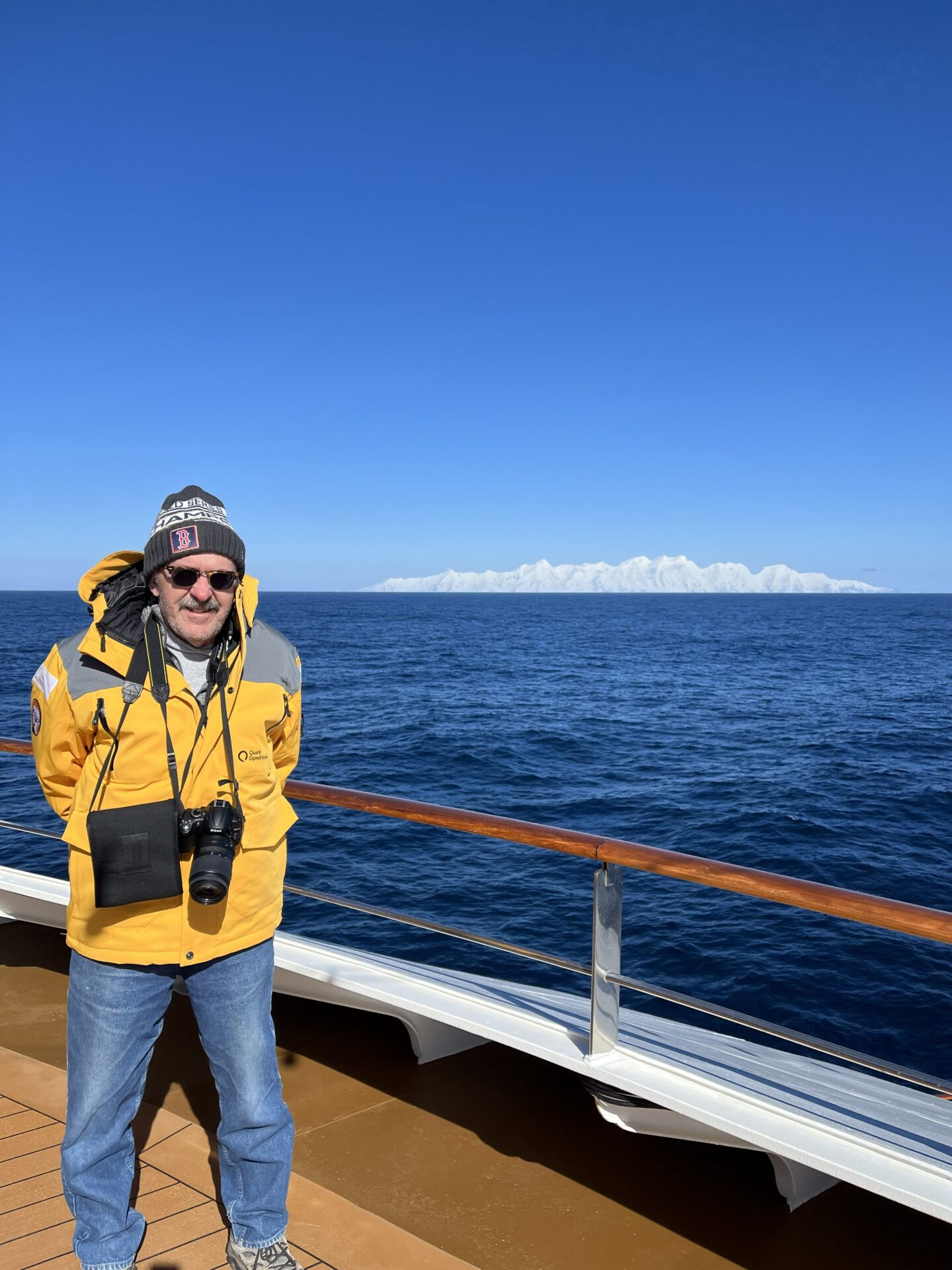
Two days later, as I was sitting in my cabin waiting for a motion sickness pill to take effect, a Quark guide informed us we could see the first evidence of Antarctic land. It was the South Shetland Islands north of our initial landings in Antarctica. Head still swirling, I dashed up two floors to the front deck where I saw the sharp, white cliffs of Smith Island rising in the distance. I forgot everything that had occurred since my nighttime departure from JFK. I hopped from one leg to another as though I were one of those 19th century explorers seeing land after months on the open seas. I donned my special Antarctic parka provided by Quark and stepped outside into the freezing air. I needed a selfie to show the folks at home. One of the guides took it with my smartphone. In the photo, I have my binoculars and 35 mm camera hanging around my neck in front of my bright yellow parka. My hands are clasped behind my back, and I’m leaning forward into the wind. A thick knit cap covers my head. One might even have confused me for a “real” polar explorer. Over my left shoulder sits Smith Island in the distance. Between our ship and the island are the calm (thankfully) waters of the deepest blue imaginable. What viewers of this photo can’t see are my teary eyes behind eyeglasses darkened by brilliant sunshine. After dreaming of setting foot on this land for over four decades, I realized that it is finally going to happen. Until this moment, I had convinced myself something would prevent this. Over 7,000 miles from my home in Upstate New York, I had a sense I’d finally reached another home. (This image is the cover photo of my blog post.)
***
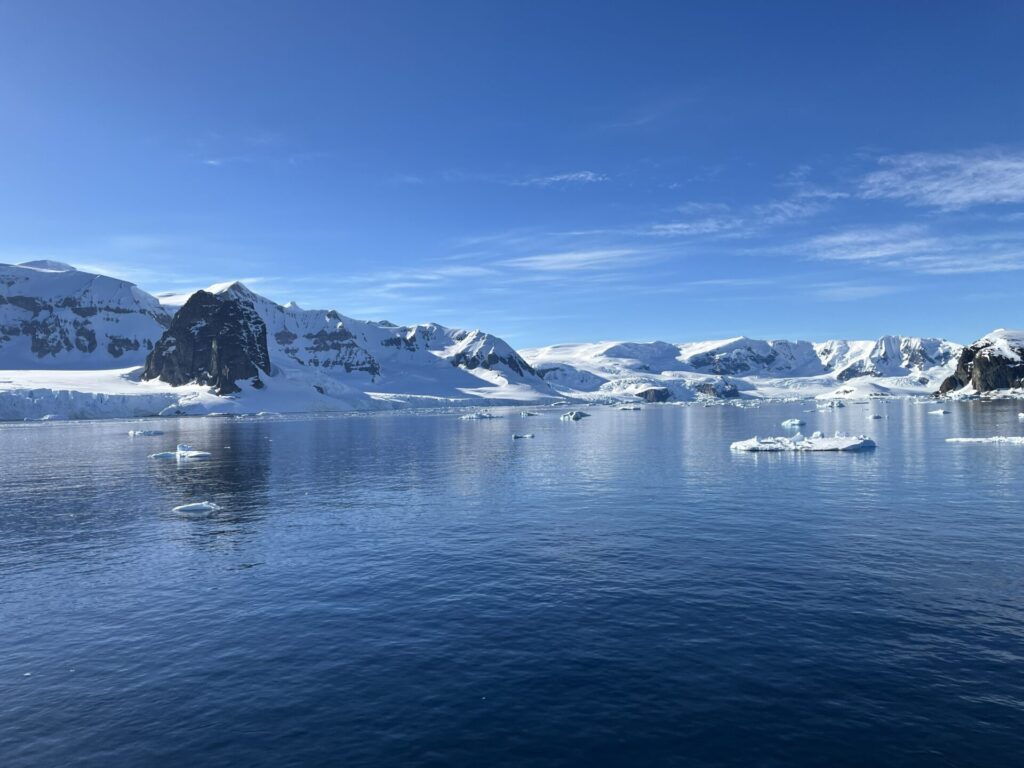
Nov. 19, 2025: Overnight our ship slipped into calm, azure waters near Cuverville Island, just off the Antarctic Peninsula shoreline. Many non-scientific research Antarctic expeditions like ours take visitors here because it’s the closest point where vessels from Argentina can reach the continent without traveling farther for weeks or months. The rest of this 5 million-square-mile land is simply too remote and inhospitable for us humans, except for scientists and explorers who devote months, even years to the endeavor, and use special clothes, buildings, and equipment.
After breakfast—the first time in over two days I could walk corridors and climb stairs without rocking from wall to wall—we followed instructions we were given at a briefing the night before. Passengers were assigned to four different groups for purposes of an orderly dispatch for excursions onto calm Antarctic bay waters and the solitude of the continent’s ice- and snow-covered land. Part of the reason for dividing up passenger groups was for the crew to effectively manage the complex process of suiting up and boarding rafts to leave our ship. Also, under international law, expedition ships like ours are only allowed to send 100 passengers at a time onto land. The four group names were Penguin, Albatross, Seal, and Whale. I was in the Whale group, which I hoped was not based on the body shapes of me and my fellow 39 passengers.
Once our group was called over the PA system, we left our cabins for a hectic, noisy third-floor locker room/prep area. Here we donned layers of warm, waterproof clothes we needed to leave the ship. It was not an easy process. We pulled on our own waterproof pants and special Quark boots. After making sure we had thick gloves, hats, and other articles like scarves and gators ready, we pulled on the thick Quark parka. Our final step involved placing a life jacket on top of the parka— no easy chore, given how thick the parka was. Often, I’d ask fellow passengers to help me slip on the life jacket amid the mayhem of excursion prep.
Once we felt ready, we ambled down a hallway to a tunnel that led to our departure area. Quark workers checked our readiness and tugged on lifejackets to make sure they were tightly strapped. Often, guides played music to help us get ready as we marched toward a door that led down steps to the water. As a last step, we walked through a machine with rotating brushes and disinfectants that removed any contaminants from boots. We didn’t want to introduce germs, viruses, or other pathogens onto Antarctic land or to the wildlife there—with special attention paid to avoid introducing avian flu.
Finally out the side door, we descended steps to the powered Zodiac rafts that would carry us away from the ship. These rafts are common to expeditions such as these, with air-filled pontoons encircling the craft. If you’ve seen movies about or pictures of Seal Team missions our rafts were similar. They hold 10 passengers and a guide who doubles as pilot. We sat in a semi-circle on top of the pontoon and reached for a rope behind us to hold on. Boarding could be challenging as our ship and the Zodiac rocked from time to time. We were instructed on using the “sailor’s grip” to accept help from guides. You extend your hand and firmly grasp the guide’s forearm. The guide does the same, grasping your arm. Once aboard the Zodiac we were instructed to move and get seated as quickly as possible. Standing in the Zodiac could be a little risky, and we needed to make room for those boarding behind us.
I was usually a little exhausted at this point, especially since I often felt warm inside all our garb—even in the frigid temps. I got used to it, and my fatigue disappeared once we cast off from our ship.
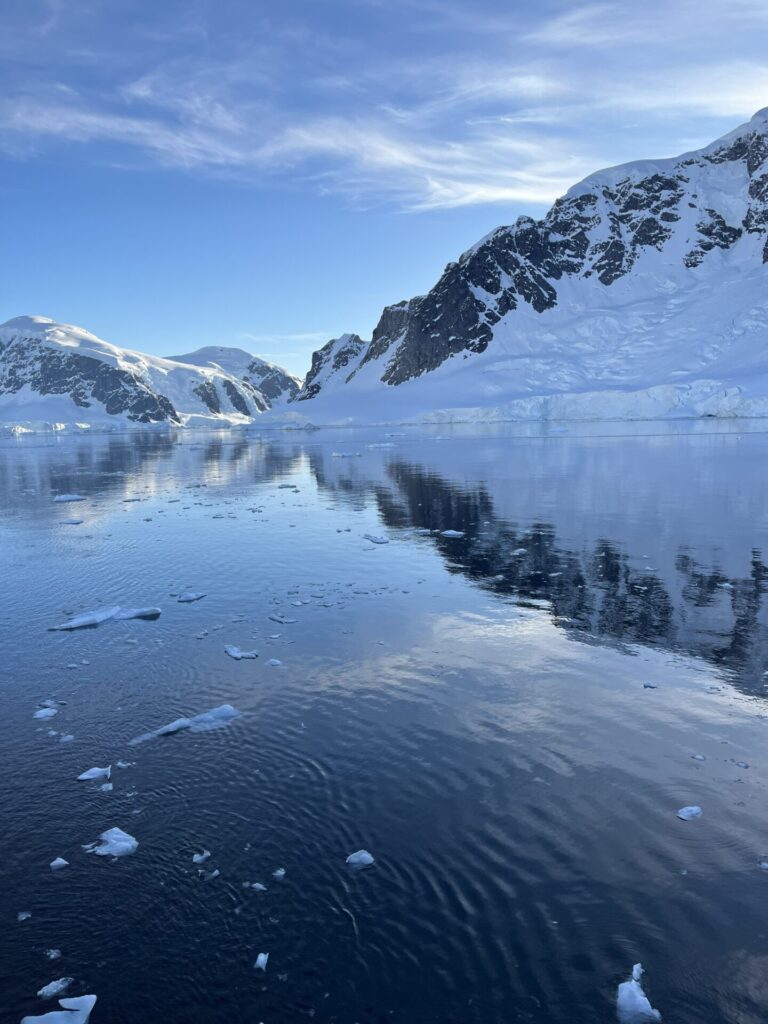
We skimmed across the smoothest, clearest of waters in a bay between Cuverville Island and the Antarctic mainland. The water was so clear we could see the bottom in shallow areas. We poked among small icebergs with the rising, white peaks of the mainland providing a stunning backdrop. At this point I was glad I’d followed Quark’s advice to add a pair of ski goggles on top of my auto-dim eyeglasses. Between the blazing sun in the cloudless sky, the profound “whiteness” of the landscape, and the deep-blue waters I was thankful for the added filtering. Our guide provided a steady narrative on the landscape and wildlife after we left the World Explorer ship. We toured the bay for about an hour before turning toward land at around 10:30 a.m.
I must say at this point that one of my absolute “musts” on this epic trek was to see a few penguins and maybe snap some photos. Anything beyond that was icing on the cake
Nearing Cuverville Island, where we eventually beached, I knew my expectations would be exceeded. While we prepared to land at the spot our guides had selected earlier, I spotted movement on small hills nearby. Our guide said those were collections of penguins in small areas known as rookeries, where penguins met, mated, and raised their young. It was easy to spot rookeries since the surrounding ground was stained red/brown by … penguin poop.
After our pilot nosed the Zodiac to a landing, he and other guides helped us ashore. We clambered across a small, somewhat perilous rock layer that ended before the snowy surface began. Throughout our excursions I had difficulty navigating these rocky areas and worried I’d fall and hit my head. The guides and younger, fellow passengers were quick to help me if I appeared to wobble.
Once we gathered as a group after landing, the guides gave us final instructions, including a reminder to stay at least 15 feet from penguins. These cute creatures also had the “right of way” on the many paths between rookeries and the water. “And please, please, don’t ever touch or pick them up even if they walk right up to you,” one guide cautioned. They also reminded us that, to prevent contamination, we should never sit down or place anything on the surface. Instead, they gave us poles to help us walk on the crunchy white surface. But we couldn’t even place those poles lengthwise on the ground. The guides did lay a tarp on the surface, where we could temporarily drop our knapsacks and life jackets
Minutes after landing, I found myself breathing too fast, due to excitement. How in the heck had I finally found myself on this most hallowed of lands, one of the few like it remaining in the world? I stopped briefly to slow my breathing. I felt goosebumps. I then followed my nine other Zodiac riders up a small hill, toward the first large rookery in the distance. Walking was difficult at first. It was so sunny, some of the snow and ice was soft, and our feet could sink without warning. We were also reminded during all excursions to be mindful of crevasses that the guides marked with poles.
Approaching the rookery, I picked up the sound penguins make. It’s a sort of constant twittering or trilling that rises and falls in volume but never stops. I walked up to within about 15 feet of the rookery and stopped to watch a collection of at least 100 of what are known as Gentoo penguins. They are the most common species of penguins in this part of Antarctica. And, yes, they do look like they’re wearing tuxedos. They have bright white bellies, and very dark backs. Their beaks have an orange stripe on each side, and a small blaze of white surrounds each eye and wraps around on top of their heads. The wings of these flightless birds usually droop toward the ground until they walk, when the wings are extended, presumably for balance. Their webbed feet (they are good swimmers after all) are a light orange with what look like dark nails. A short tail protrudes from their lower backs. And, yes, as many of us have seen in documentaries, they have the most peculiar walk. They teeter from side to side and lean slightly forward. Watching, I understood why the guides had warned us against touching them. They are adorable.
After observing activity at the rookery for a half hour, I handed my phone to a guide to take a photo of me by the penguin gathering. It turned out to be one of my favorite photos of the trip and wildly popular when I posted it online later that night. I posed in what I hoped was a very Ernest Shackleton-like manner. Folks back home later asked why my jacket was open and my gloves were off. It had gotten warm, by Antarctica standards, I explained. It was in the low 20s.
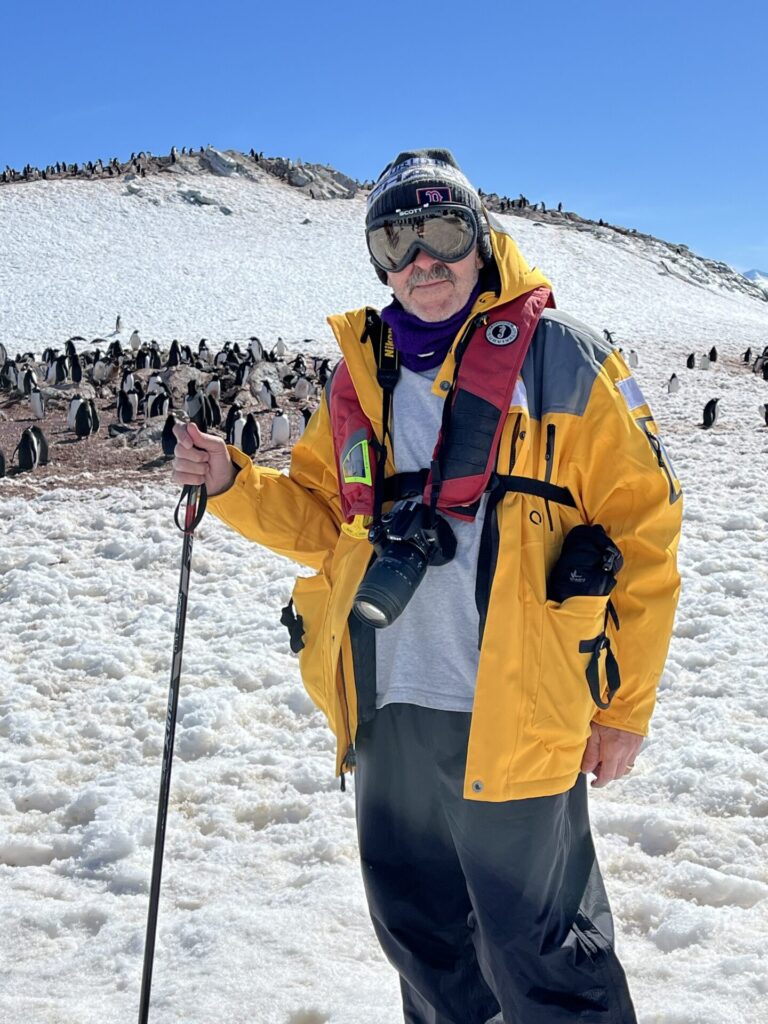
Quite honestly, I thought as I walked away to explore, I could have gone home at that point. I had already seen what I wanted the most and had the pictures to prove it. But that would have been a mistake. I had so many visual wonders ahead of me.
Walking around more before heading back to our Zodiac for departure back to the ship, I avoided following my fellow travelers up another small hill farther east on the island. I was already tired from the chore of walking on the snow and overheated from the bright sun and my thick layers of clothing. I didn’t want to over-exert myself on this first outing.
Back at the Zodiac I boarded, again with help from guides on land and in the boat. I almost fell this time and began wondering how older, less nimble passengers handled this land-boat transfer.
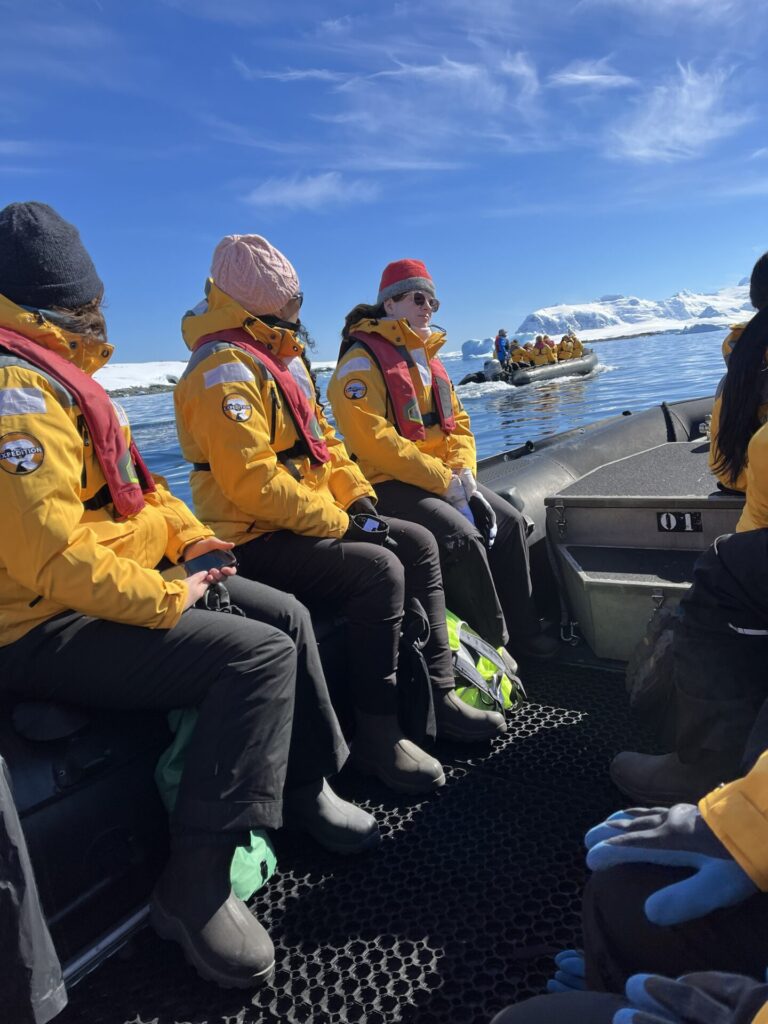
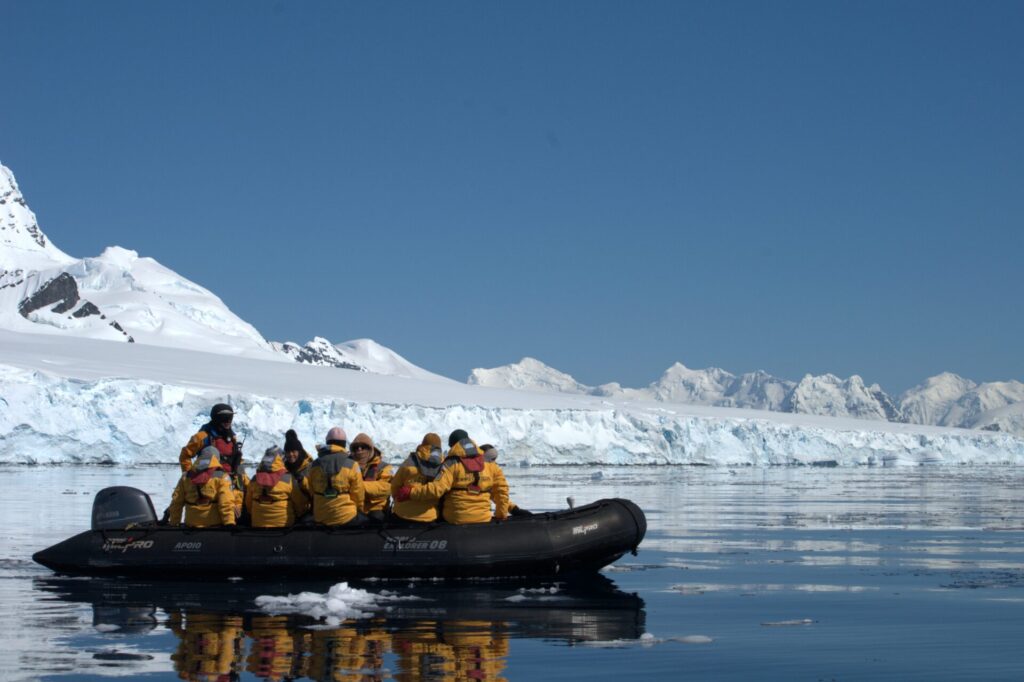
Half an hour later we arrived back at the ship. After climbing the stairs into the locker room tunnel, we were required to again walk through the boot wash to ensure we were bringing nothing back onto the ship. I was exhausted. I also realized we were scheduled to move to another location for an afternoon excursion. I slowly peeled off my layers and sat on a bench in the locker room before gathering the strength to head upstairs to my cabin before lunch. Just before I reached the stairs outside the locker room, a guide greeted me and handed me a cup of warm tea. It was the perfect end to my first steps on Antarctica.
Lunch in the dining room was a blur. I grabbed a sandwich and salad from the buffet and sat at a table by myself, examining my smartphone photos. I also had my Nikon 35 mm with me but the small screen behind the camera body made it tough to screen photos. I had opted not to bring a laptop, which would have made it easier to browse my Nikon work.
Back in my cabin, I rested. I had nodded off when the call came over the PA system for our Whale group to scurry down to the locker room for the afternoon outing. I pulled on my waterproof pants and headed down.
We went through the same preparation process (a chore I became very good at by the end of the expedition) before boarding a Zodiac for Danco Island. Our second landing site was a few miles south of Cuverville Island. Again, the scenery to and from the island was stunning. I thought I would never become accustomed to this constant presentation of National Geographic-worthy landscapes. I was right.
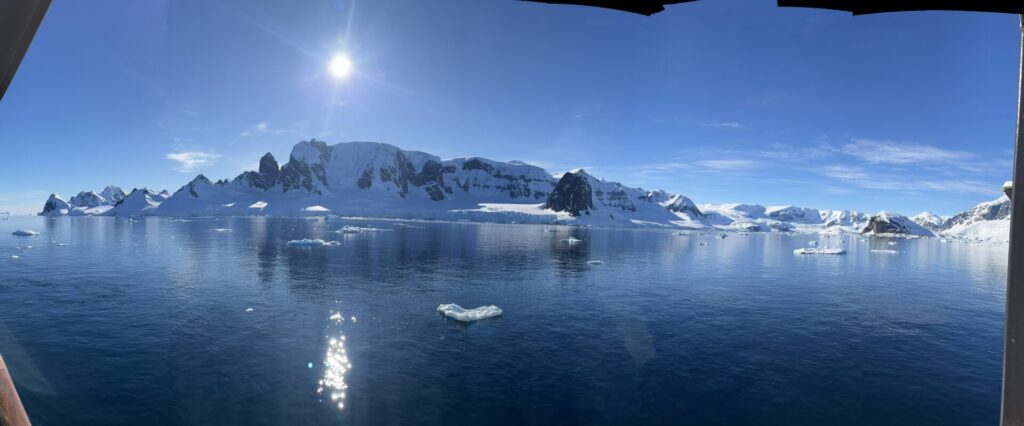
Danco Island was like Cuverville, with multiple penguin rookeries. I took more smartphone photos before using my 35mm Nikon camera and 55-300 zoom lens. The digital zoom on my iPhone 13 wouldn’t be able to capture those close-up penguin and other shots I desired. It was worth the hassle when I saw my photos back home. I could see tiny details on the outer skins of penguins.
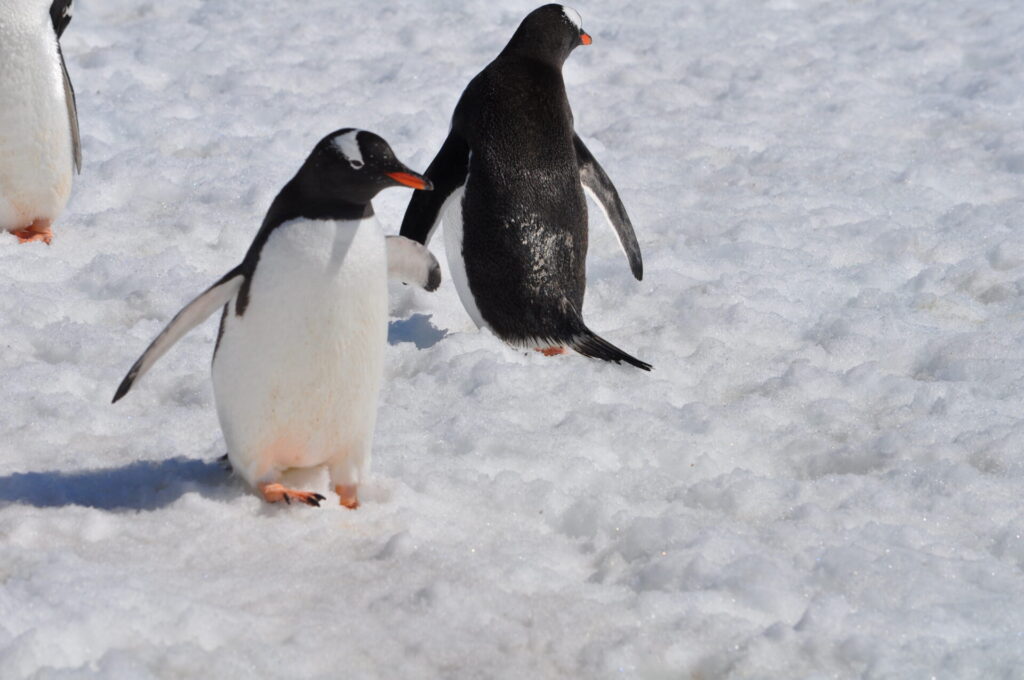
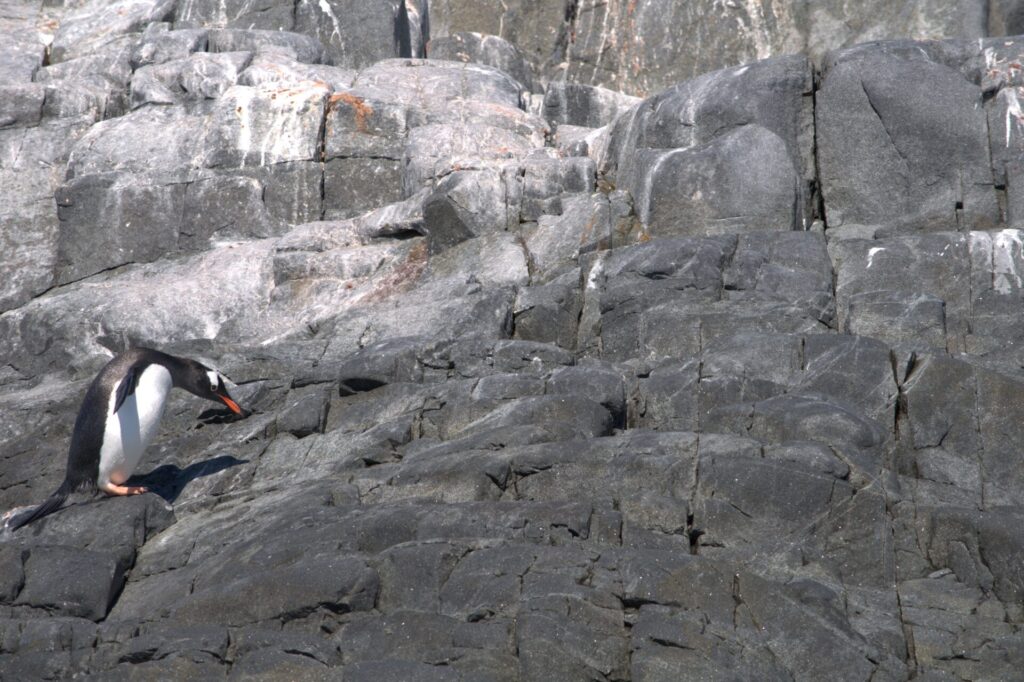
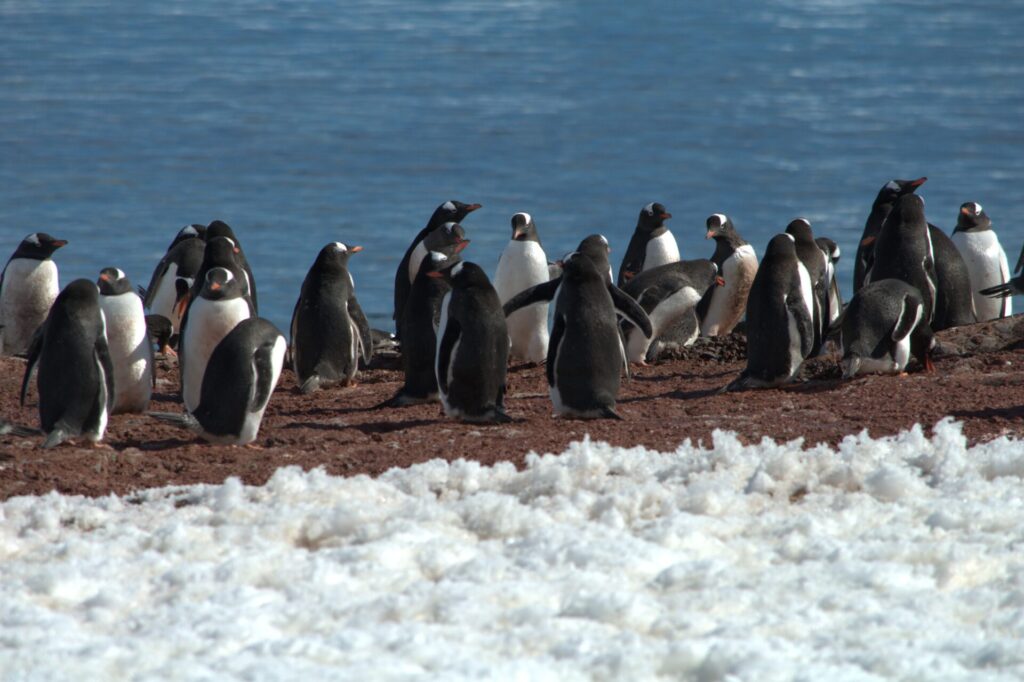
The Danco Island visit provided stunning views of a calm, mirror-like bay surrounded by sharply rising cliffs and mountains. In the distance, our ship appeared tiny. As the breezes increased on Danco, I thought of our ship as a sanctuary of sorts I’d return to later. Feeling a little stronger after my rest and lunch, I followed a single-file trail of fellow passengers up a small hill. The walking pole helped, and I took my time. I was rewarded with stunning views at the top. The scenic vista was almost too astonishing to process. I practiced putting away my cameras for 10 minutes at a time to stare and absorb a scene that was other-worldly. After two hours, we boarded our Zodiac for the ride home to the World Explorer. We saw some of our first offshore wildlife on the way. Large seals loafed on icebergs, barely lifting their heads to take notice of us. Back in my cabin, I made notes about my first two excursions, with many more to come. My head was spinning. With my layers of cold-weather clothes off, I also recorded a short video of myself before heading off to dinner one floor below.
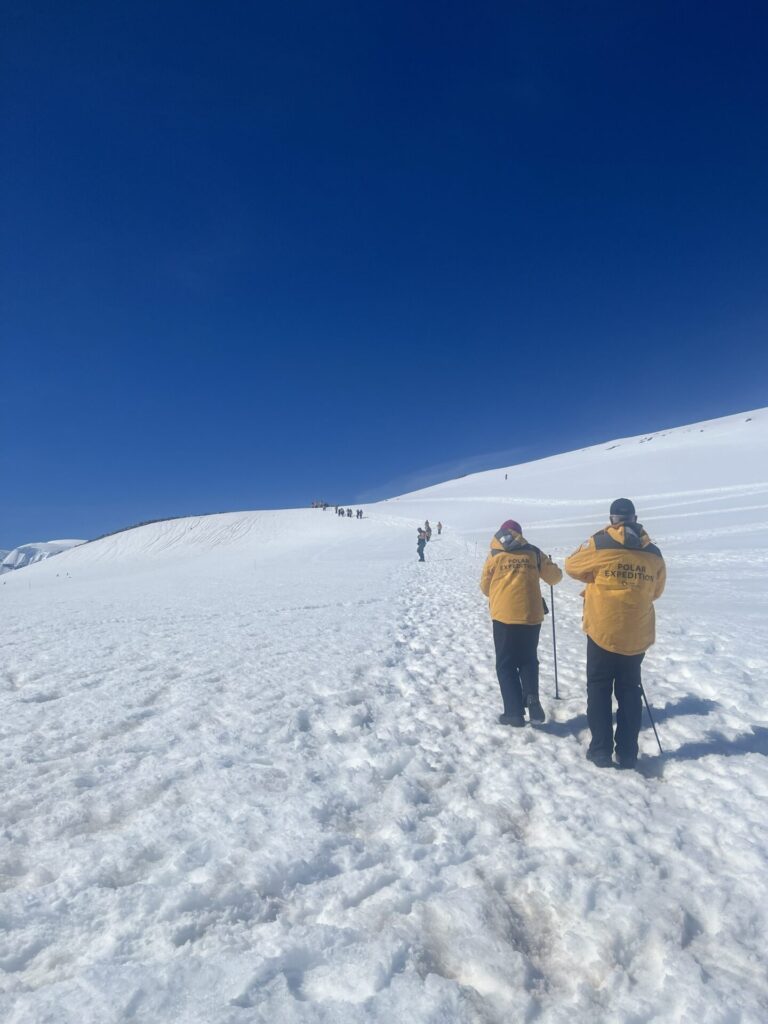
My stomach rumbled with unexpected hunger. I had two servings of steak, a salad, four glasses of wine, and a big bowl of ice cream before retiring. Since I was a solo traveler, I did sit by myself amid the general hum and hubbub of groups around me. It was a little awkward at first, but I was too tired to worry about it. During future meals I’d often be joined by other solo passengers or a few groups looking to talk. Quark was good about encouraging guides to sit with us and chat about our day.
Back in the cabin, sleep came quickly—especially without the wild rocking of the Drake Passage waters. For the first time since leaving JFK I slept soundly.
Next Chapter: More excursions; more wildlife, a stop at a permanent research station, and lectures from the scientists traveling with us.